
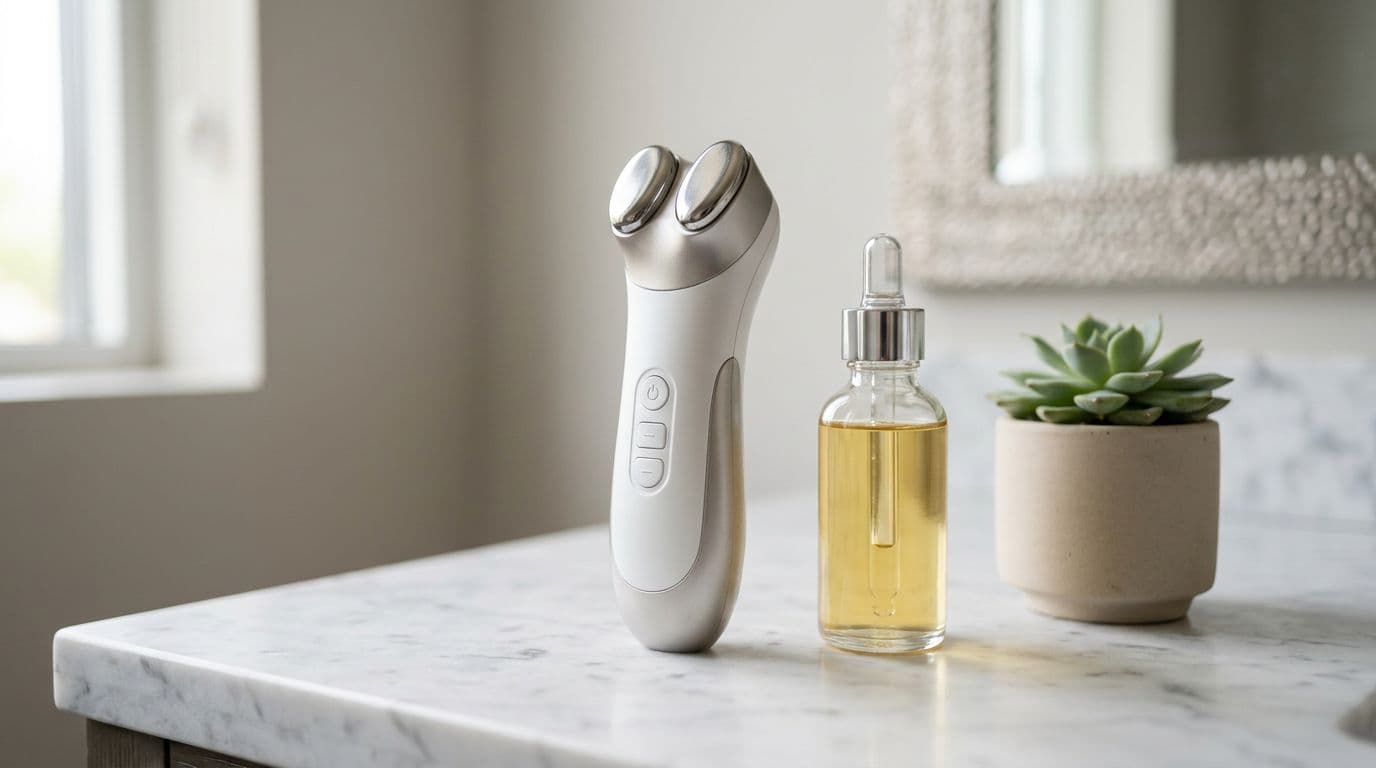
If your jawline looks sharper right after a facial, you already get the appeal. Microcurrent facial devices try to recreate that “wake up the face” effect at home, using low-level electrical currents and a conductive gel.
In 2026, the best at-home devices are faster, easier to handle, and less “fiddly” than older models. Still, the biggest difference comes down to consistency, not hype. This guide breaks down what microcurrent can realistically do, which devices are worth comparing this year, and how to use one without wasting time (or gel).

Microcurrent is often described as a “workout” for facial muscles. Think of it like gentle resistance training. You glide the device along the skin, and the current encourages muscle contractions while supporting circulation, lymphatic drainage to reduce puffiness, and improve blood circulation. That combination is why many people notice a temporary lifting effect right after a session.
Longer-term changes are usually more subtle. With regular use, the technology stimulates collagen production, elastin production, and adenosine triphosphate to promote skin tightening and address fine lines and wrinkles, so some users see firmer-looking skin, a bit more contour, and better “snap” in areas like cheeks and jawline. Results vary because skin thickness, age, and consistency matter a lot.
Another 2026 trend is app-led treatments. These guide placement, timing, and intensity, which can help if you’re new. On the other hand, a no-app device can feel simpler, especially if you just want a quick five-minute routine.
Some devices also include nanocurrent technology (brand wording varies). Those programs tend to feel softer on the skin, and they often focus on tone and overall look rather than a strong twitch. If you’re sensitive, that can be a plus. These at-home devices provide convenient access compared to professional-grade treatments found in clinics.
For a sense of what testers notice over weeks, see CNET’s long-form device testing in this microcurrent device review roundup. It’s a useful reality check on timelines and day-to-day usability.
The most common pattern is a quick, temporary lift after each use, plus slower changes that show up after several weeks of consistent sessions.
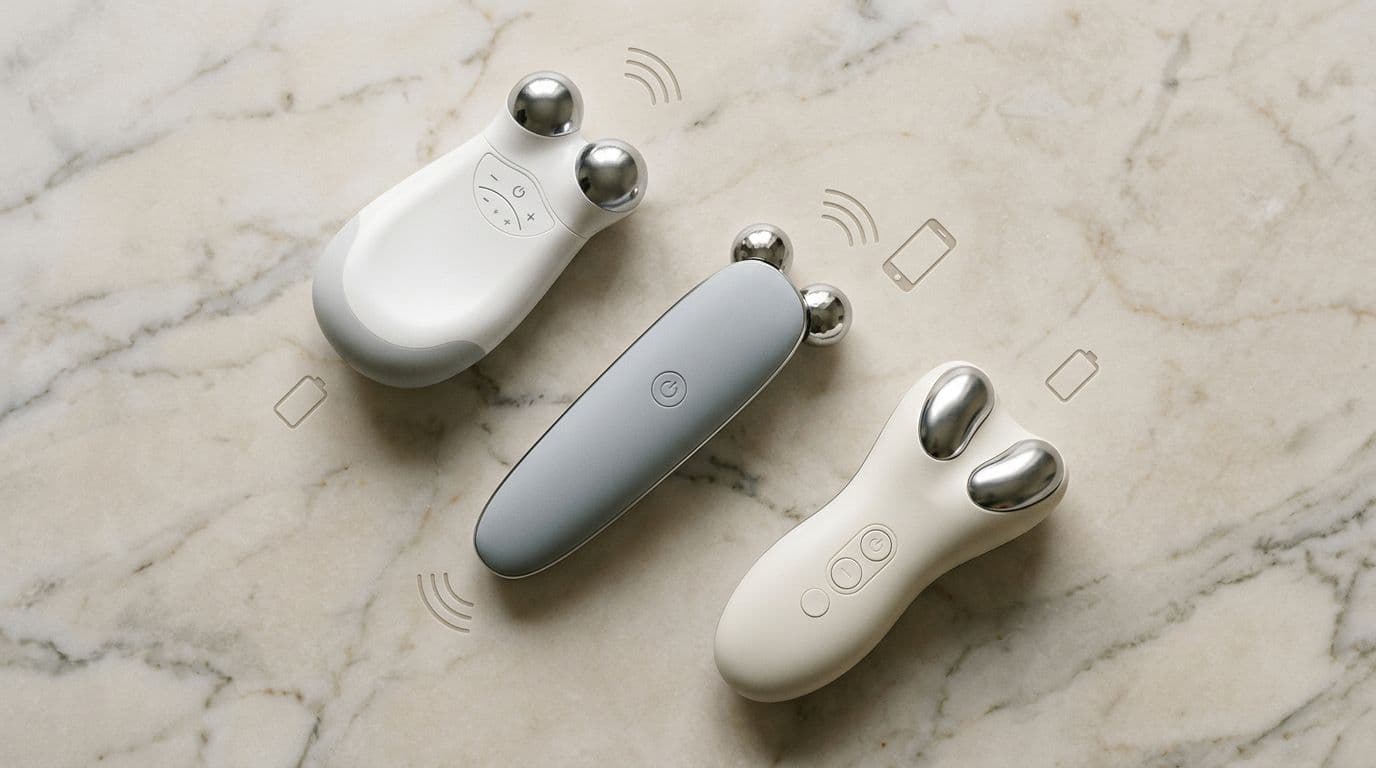
As of March 2026, five top FDA-cleared device models show up again and again in editorial testing and buyer shortlists: NuFace Trinity Plus, Therabody TheraFace Pro, Foreo Bear, Ziip Halo, and Neurotris Pico Toner. Availability is strong for most mainstream brands, while pro-leaning tools may require more patience and practice.
Here’s a quick side-by-side to help you narrow it down.
| Device (2026 pick) | Best for | Standout features | Pros | Cons | Typical pricing (Mar 2026) |
|---|---|---|---|---|---|
| NuFace Trinity+ Starter Kit | Most people who want simple, repeatable lifting and facial contouring | Multiple intensity levels, classic two-sphere head, no app required | Easy routine, widely available, strong “quick lift” feel | Technique takes a few tries | Listed around $395 (varies by retailer) |
| Therabody TheraFace Pro | Anyone who wants one tool for several concerns | Microcurrent plus LED light therapy, facial massage tools, and other attachments (varies by kit) | Versatile facial toning device, good for de-puffing routines | Larger device, gel often sold separately | Listed around $419.99 (varies by retailer) |
| FOREO Bear 2 | App-lovers who want guided sessions | App coaching, pulsing features, compact shape | Very portable, structured programs | App feels required for best experience | Price varies by retailer |
| ZIIP Halo 2.0 | Advanced users who like program variety | App library with multiple treatments, microcurrent-style and gentler modes | Lots of routines, good for “custom” goals | App required, learning curve | Listed around $399.99 (varies by retailer) |
| Neurotris Pico Toner | Pro-leaning users who enjoy technique | Multi-mode current patterns, often used with accessory tools | Highly customizable | Higher price tier, more to learn | Often $500+; check current listings |
The takeaway: If you want straightforward lifting with minimal setup, NuFace Trinity Plus is still the safe bet. If you want an all-in-one face tool, TheraFace Pro can replace several gadgets. If you enjoy guided programs, Foreo Bear and Ziip Halo make the routine easier to follow and fit seamlessly into a modern skincare routine.
For more consumer-friendly pros and cons, compare editorial notes in Cosmopolitan’s tested microcurrent device list. If you prefer a broader 2026 roundup format, this microcurrent device guide for 2026 can help you spot feature patterns across brands.
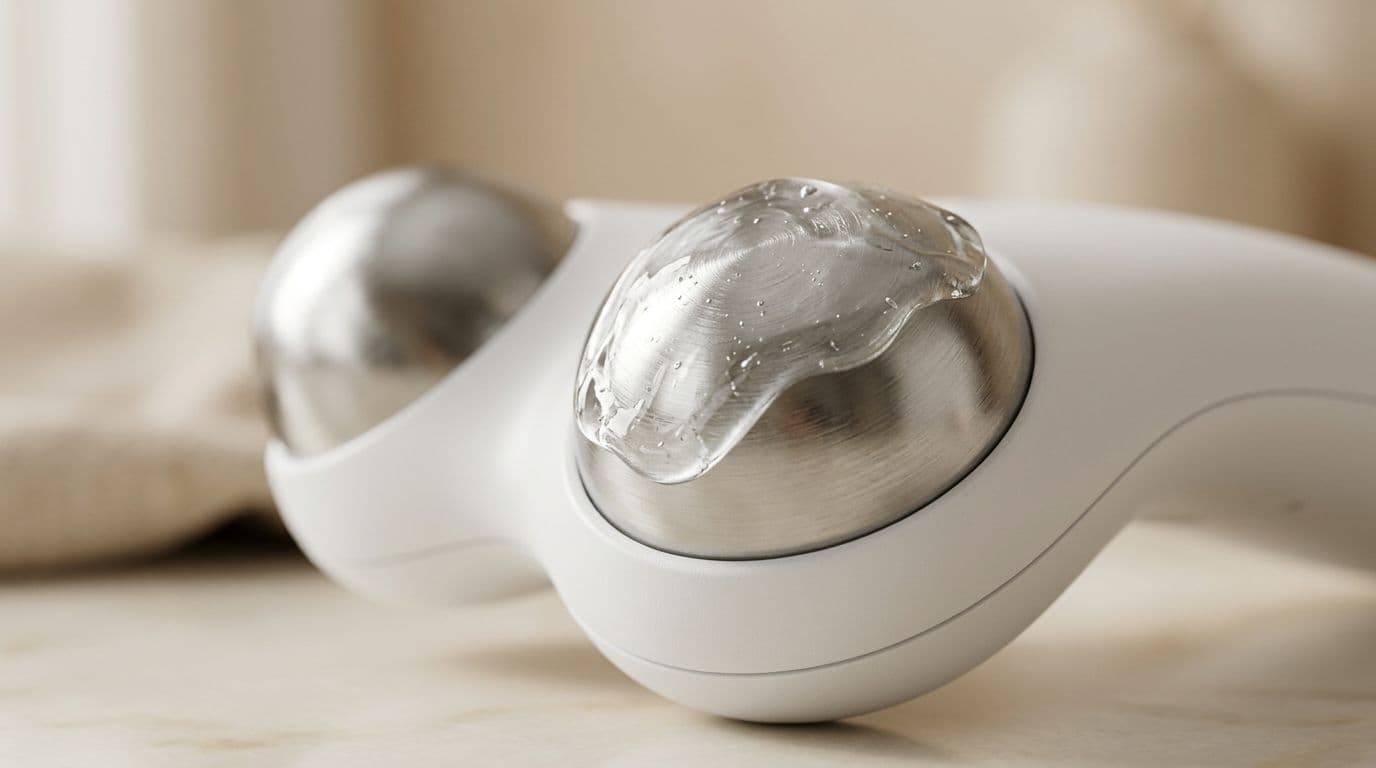
Microcurrent works best with the right “slip” for your skincare routine. That usually means a dedicated conductive gel or brand activator. Face oil makes the device glide, but it can reduce conductivity. Thick cream can also block contact. When in doubt, use the conductive gel made for your device.
A simple routine keeps you consistent:
Consistent use of these at-home devices is key for results. Most brands suggest frequent use at the start. A common schedule is 5 to 10 minutes per session, about 5 days per week for 4 to 6 weeks, then maintenance a few times weekly. You may see a “just used it” lift right away, while firmer-looking changes usually show up later, if they show up at all.
For upkeep, wipe the device heads after each use, then do a deeper clean weekly (follow your manual). Also, replace gel if it changes smell or texture, and don’t share gel jars.
Skip microcurrent, or talk with a clinician first, if you have a pacemaker/implantable device, seizure disorders, or you’re pregnant (out of caution). Also check with your dermatologist if you have active skin infections, open wounds, or you recently had a procedure.
Be extra careful around injectables compared to in-office treatments and professional-grade treatments. Many clinicians advise waiting after Botox or filler, but timing depends on your case. When in doubt, ask the provider who did your treatment.
If you’re unsure, bring your device name to your clinician and ask, “Is this safe for me right now?” That one question can prevent weeks of guessing.
The best microcurrent facial devices in 2026 aren’t about big promises; they’re about a solid skincare routine you’ll actually do. Start with the device style you’ll stick with, pair it with the right conductive gel, and track your results over a month, not a weekend. If you have medical concerns or recent injectables, get a clinician’s OK first. With consistent use and realistic expectations, microcurrent at-home devices can be a practical way to support lifting and firming, along with wrinkle reduction, for a firmer-looking face at home.







Leave a comment